Attic ventilation, and why it is a roofing question
A new roof laid over a badly ventilated attic is a new roof that will age like an old one. Ventilation is the cheapest thing on a roofing bid and the one most often left off it.
- Sheet
- A08
- Subject
- Attic ventilation and its failures
- For
- A homeowner planning a re-roof
- Trade
- Roof replacement
Intake and exhaust are one system
An attic is ventilated by air moving through it, which means air has to get in as well as out. Intake is at the bottom, at the soffits. Exhaust is at the top, at the ridge or high on the slope. If either half is missing or blocked, the other half does almost nothing, and this is where the majority of ventilation problems in this metro actually live.
The classic version goes like this. A ridge vent gets cut in during a re-roof, which is correct and good. Nobody looks at the soffits. The soffits are either painted shut, blocked by decades of attic insulation pushed out over the top plate, or were never perforated in the first place. The ridge vent now has nothing to pull, so it draws what little air it can from the house below through gaps around light fittings and the attic hatch, which is worse than doing nothing. The homeowner paid for ventilation and got a decorative strip.
Look for yourself
Stand under the eave on a bright day and look up at the soffit. You should see perforations or vents, and they should not be filled with paint. Then look in the attic at where the roof meets the outside wall. If insulation is packed right out to the sheathing there, the intake is blocked no matter what the soffit looks like from outside.
The mixing problem
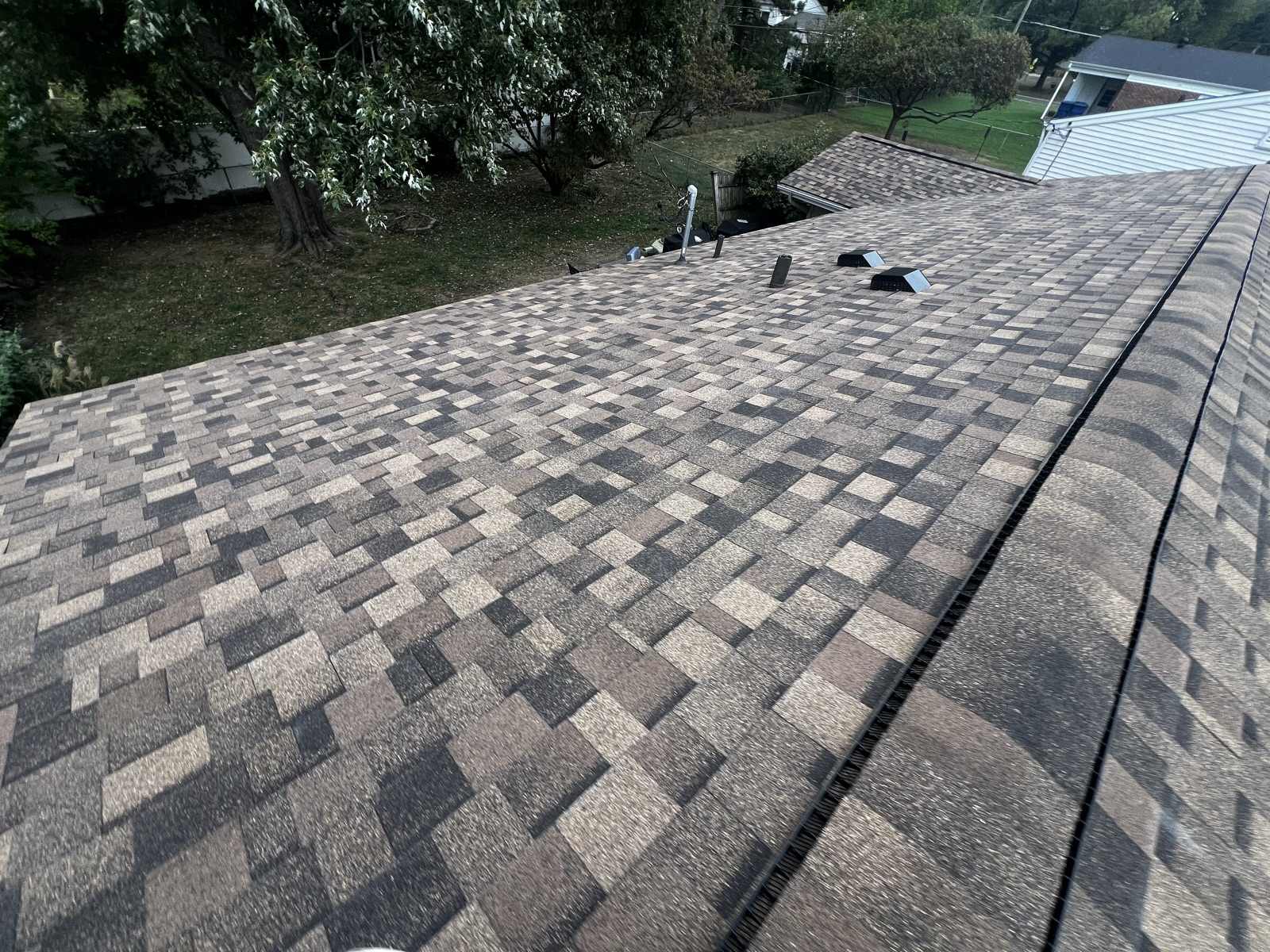
The second common failure is subtler and it looks like generosity. A house has a ridge vent, and somebody also fits a powered attic fan, or gable end vents are left open, or there are turbines up there as well. More exhaust must be better. It is not. Air takes the easiest path, so a powered fan will happily pull air in through the nearest ridge vent rather than up from the soffits, and the whole lower half of the attic simply stops moving. Gable vents alongside a ridge vent do the same thing horizontally.
The rule is dull and it is the rule: one exhaust type at the top, balanced against adequate intake at the bottom. If a ridge vent is being cut in, the gable vents should generally be closed off and the powered fan retired. That is a conversation that belongs on the bid rather than a decision made silently on the day.
What a badly ventilated attic looks like
| What you see | What it means |
|---|---|
| Rust on the nail points in the attic | Moisture is condensing on the coldest metal in the space. Classic winter symptom of trapped humid air. |
| Frost or damp staining on the sheathing | Same cause, further along. Left alone this delaminates plywood and swells strand board. |
| Shingles curling on the sunny slopes early | Attic heat cooking the deck from below through the summer. The roof ages from underneath. |
| Ice dams at the eaves in a cold snap | Warm attic melting snow on the upper slope, meltwater refreezing at the cold overhang. Ventilation and insulation together. |
| A bathroom fan duct ending in the attic | Somebody vented a shower into the roof space. Astonishingly common and entirely fixable. |
What Keys does on a replacement is straightforward: cut a ridge vent where the ridge is long enough to carry a useful one and the intake exists to feed it, fit box vents where a ridge will not work, check that the soffit intake is genuinely open, and say so if it is not. Insulation work and duct work are not roofing and Keys does not do them, but a roofer who never looks in the attic is selling you a surface rather than a roof.