Gutters, downspouts and where the water ends up
Gutter is the cheapest part of the exterior and the part most capable of costing real money when it is wrong, because everything it gets wrong ends up against a foundation.
- Sheet
- A09
- Subject
- Gutters, downspouts, guards
- For
- A homeowner with an overflow
- Trade
- Gutters and downspouts
Sizing, and the mistake of matching what was there
The common residential gutter in this market is five inch K style, and on a great many houses it is the right thing. It stops being the right thing when a large steep plane is feeding a short run of eave. A steep roof delivers water fast, and volume arriving fast will simply overshoot a five inch trough in the sort of rain that arrives here in April, no matter how competently that trough was hung. On the bigger cut up rooflines common in Chesterfield, six inch gutter with a correspondingly larger downspout is frequently the honest answer.
The reason it usually does not happen is that gutter is replaced by matching what came off. If the house has always overshot at one corner in a hard rain, and the replacement is the same size in the same place, it will carry on overshooting, and the homeowner will conclude that gutters simply do that. They do not. That corner is undersized.
| Element | What matters |
|---|---|
| Trough size | Matched to the area and the pitch of the plane feeding it, not to what was there before. |
| Hanger spacing | Close enough that the trough does not sag between fixings. Sag creates a low point, a low point holds water and silt, and standing water is how a gutter fails. |
| Fall | A consistent slope toward the outlet. Too little and it stands, too much and it looks wrong against the fascia and overshoots at the low end. |
| Downspout count and size | One outlet at the end of a long run is the most common shortcut. Water has to travel the whole length before it can leave. |
Gutter guards, honestly
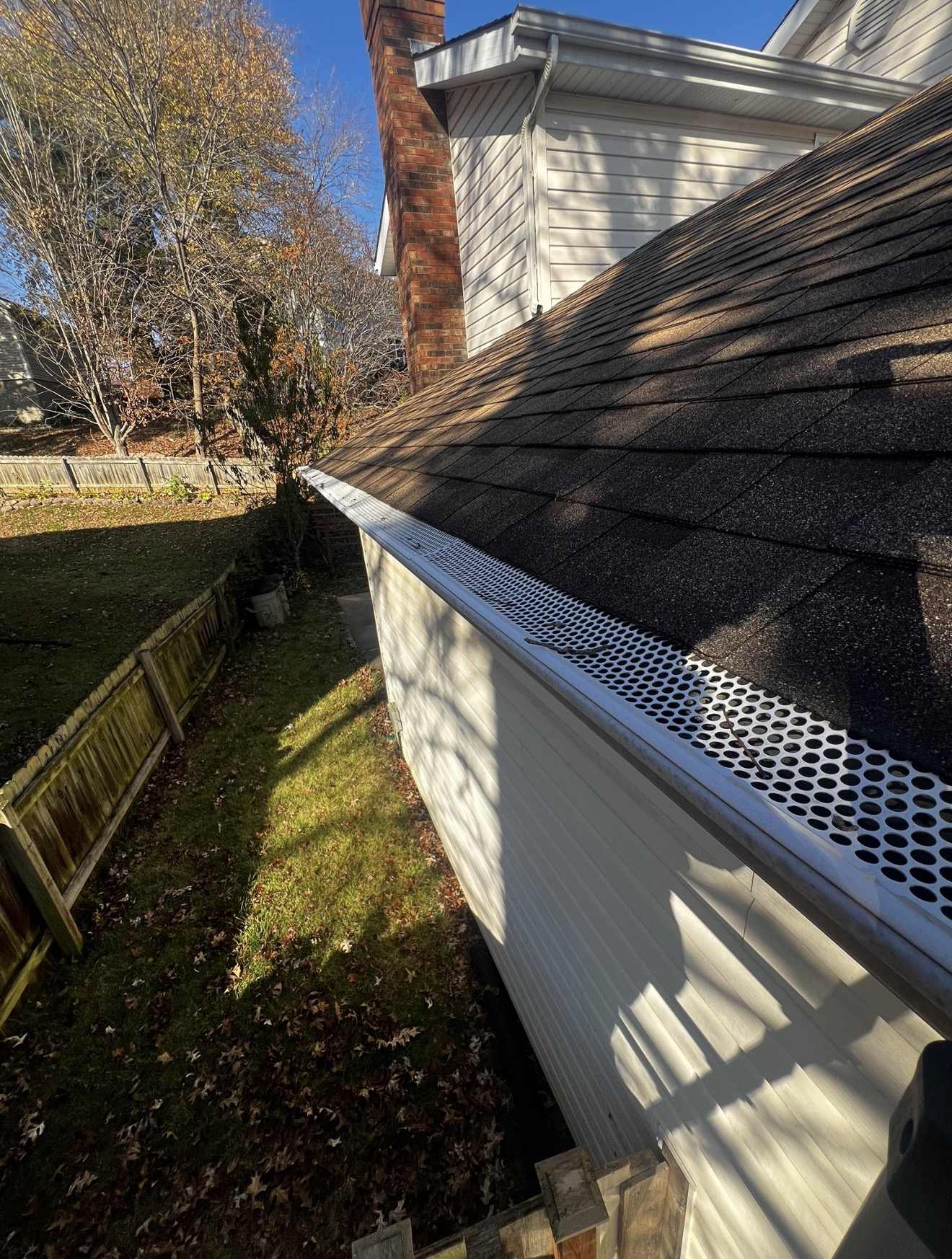
Guards are sold hard in this market and the claims made for them are frequently ridiculous. Here is the version a homeowner can actually use.
- A guard genuinely reduces how often a gutter needs clearing, and on a two storey house under mature oaks that is a real and worthwhile benefit.
- A guard does not eliminate maintenance. Fine debris, shingle granules, seed and pollen get through or build on top, and the guard itself needs looking at.
- Under a steep plane in heavy rain, some guard designs shed water straight over the front of the gutter. The gutter then stays clean and delivers nothing.
- A guard fitted over a gutter that is undersized, sagging or wrongly fallen does not fix any of those. It hides them.
- Guards can lift and gap along a run, particularly where the trough is not straight or where the front edge is only resting on the lip rather than fastened to it. Ask how it is fixed at both edges before you buy it.
The honest sequence is: get the trough right, get the fall right, get the outlets right, and then decide whether a guard is worth it for your particular tree situation. Doing it the other way round is buying a lid for a bucket with a hole in it.
Scope limit
Keys does gutters and downspouts. Underground drainage lines, sump discharge, French drains, regrading and hard landscaping are not roofing and Keys does not do them. Where the problem is clearly below ground, you will be told that rather than sold a gutter.
The last ten feet
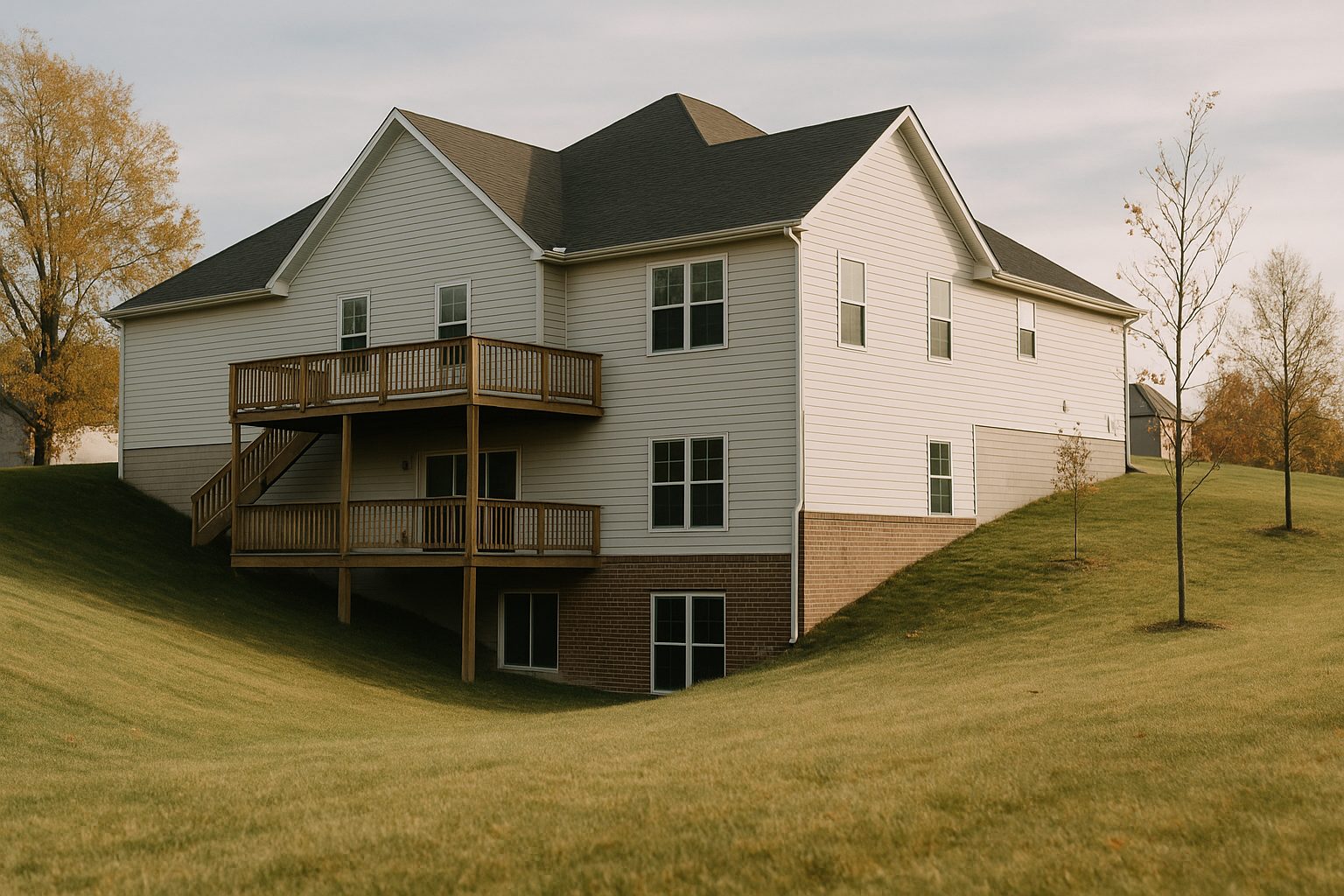
Almost nobody merchandises the part of the system that actually decides whether a basement stays dry: what happens after the water leaves the downspout. A downspout that discharges at the base of the wall is delivering the entire roof, concentrated, to the one place you least want it. On a Chesterfield lot with a walkout, that water then has an obvious path to follow and it will follow it.
Extensions, splash blocks and getting the discharge out past the backfill zone are cheap, and they are the highest return item on this whole sheet. If you do nothing else after reading it, go outside during the next hard rain and watch where your downspouts put the water. That five minutes will tell you more about your foundation risk than any inspection.